Skip to content

Combating Microplastics with Precision:
High‑Performance Wire Mesh for a Cleaner, Safer Tomorrow

Water scarcity, global warming, and rising sustainability demands are accelerating the need for tighter filtration standards, especially when microplastics are a growing concern. Precision‑engineered woven wire mesh empowers you to elevate capture efficiency, enabling resilient systems that meet the strictest environmental and regulatory expectations.

Engineered Precision, Cleaner Water:
Custom Wire Mesh for Microplastic Control

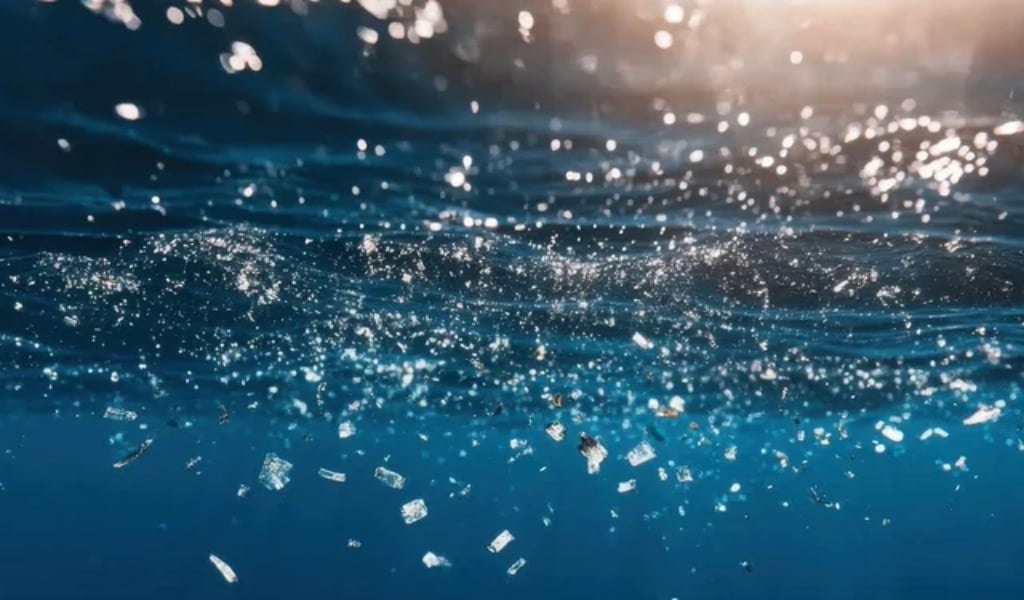
Microplastic pollution is driving industries to rethink how they capture microscopic particles before they enter waterways and ecosystems. With initiatives such as the Fighting Fibers Act of 2025 set to require built‑in microfiber filtration systems in all new U.S. washing machines by 2030, pressure for more reliable and efficient filtration solutions is higher than ever.


Woven wire mesh meets this need with precision‑engineered pore sizes, long‑term durability, and consistent performance across varying form factors. Our mesh portfolio includes specifications as fine as 5 microns, enabling highly efficient capture of microplastics at the earliest stages of processing or discharge. Unlike disposable or synthetic media that break down over time, wire mesh maintains structural integrity and repeatable efficiency, making it ideal for capturing microplastics at the source.


As regulations tighten and environmental expectations rise, woven wire mesh offers a future‑ready solution that balances performance, longevity, and compliance. And because stainless steel wire mesh is fully recyclable and highly sustainable, it supports long‑term environmental goals while reducing waste compared to disposable filtration materials.

Protect The Performance Of Your Water Filtration System From the Start

Microplastics pose a growing threat to both water system performance and, more importantly, human health. Effective pre‑filtration serves as your first line of defense, capturing these particles before they move downstream.

Intercepting microplastics early, you help prevent system clogging, reduce strain on secondary filters, and maintain more consistent water quality. 

Challenges Woven Wire Mesh Can Solve

faviconSufficient Capture of Microplastic Particles
Microplastics often fall below the effective capture range of many conventional filtration media, allowing harmful particles to pass through treatment stages. Precision‑woven wire mesh offers controlled pore sizes and tight tolerances, enabling reliable retention of particles down to the micron level without disrupting system flow.

faviconAdaptable Filtration Components for Any System
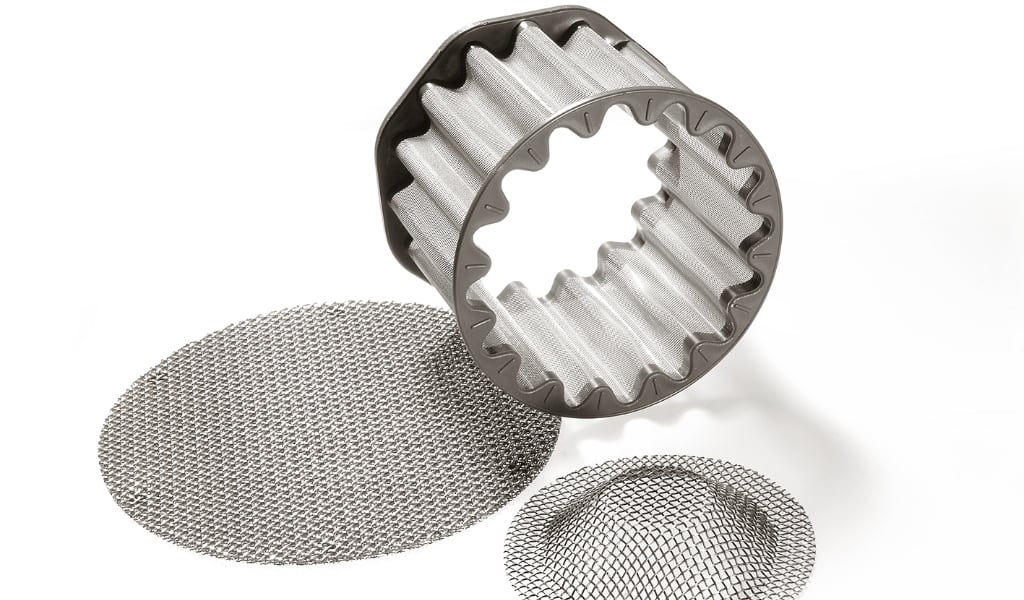
Systems targeting microplastics often require custom geometries or formed elements that other filter materials cannot accommodate. Wire mesh can be woven, sintered, and formed, into custom shapes, enabling you to engineer high‑precision components without compromising strength or filtration accuracy.

faviconCost-effective Reusability
Many microplastic filtration solutions rely on disposable filters that generate waste and increase total cost of ownership. Wire mesh’s robust structure allows for repeated cleaning, backwashing, and extended reuse, helping manufacturers offer more sustainable and
cost-efficient solutions to their customers.

faviconInjection‑Molded Components Make a Perfect Fit
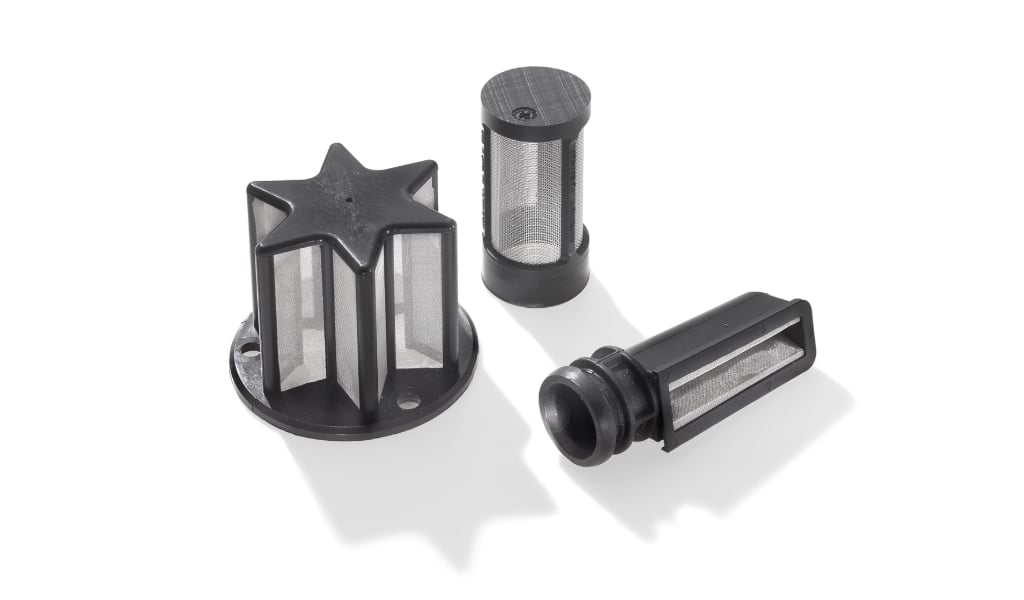
Our in‑house plastic injection molding capabilities allow us to produce custom components built around your exact wire mesh specifications, ensuring a seamless fit and stable alignment. By tailoring frames, supports, and integrated assemblies to your geometry and tolerances, we help your filtration system capture microplastics efficiently and perform reliably over the long term.

faviconHigh-Pressure Filtration
Many filtration materials deform or collapse under the high pressures needed to push microplastics through treatment systems, while the rigid, load‑bearing structure of woven wire mesh maintains its shape and performance through repeated pressurization cycles. This stability also makes backwashing far more effective and easier than with synthetic media, ensuring faster cleaning and longer-lasting filtration efficiency.

faviconMicroplastics in Washers and Dishwashers
Washing machines and dishwashers are among the leading sources of microplastics entering the environment. By integrating woven wire mesh for filtration, these appliances can help capture microplastics at the source, significantly reducing their ecological impact.

Precision Meets Flow:
Choosing the Right Weave for Microplastic Filtration

Plain-Weave-Stainless-Steel-Wire-Mesh

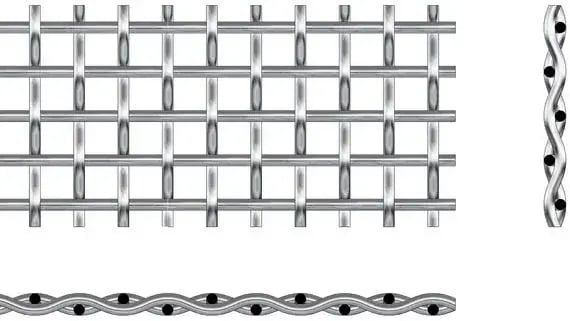
Plain‑weave wire mesh is a dependable filtration medium for microplastic capture thanks to its uniform pore geometry, high flow rates, and exceptionally low pressure loss compared to traditional filter cloth. Its simple over‑under structure delivers consistent, square openings that perform best at 25 microns and above, making it especially suitable for applications where efficiency, throughput, and predictable particle retention are key.

While plain weaves are not as mechanically stable as filter cloth in certain dynamic environments, their metallic construction provides superior chemical resistance, thermal tolerance, and long‑term durability, attributes that outperform disposable synthetics in demanding or sustainability‑driven systems. For appliance OEMs, plain‑weave wire mesh is particularly well‑suited to filter finenesses of 50 microns or above, making it an ideal choice for next‑generation dishwasher filtration assemblies.

For system designers seeking a medium that balances flow performance, durability, and straightforward integration into microplastic‑mitigation solutions, plain‑weave wire mesh offers a practical, future‑ready option.
RPD-HIFLO-S-Overview


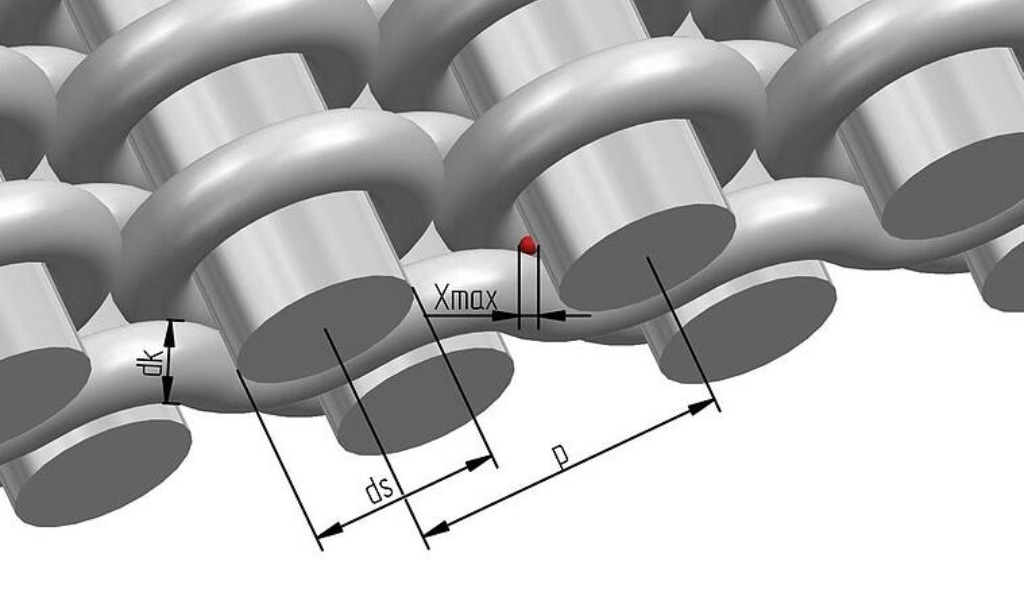
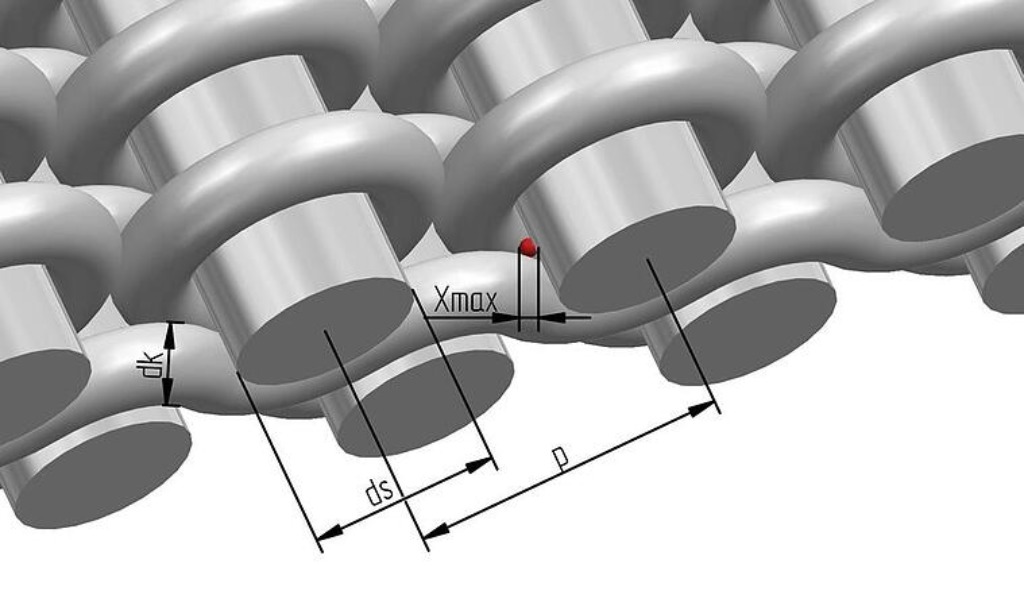
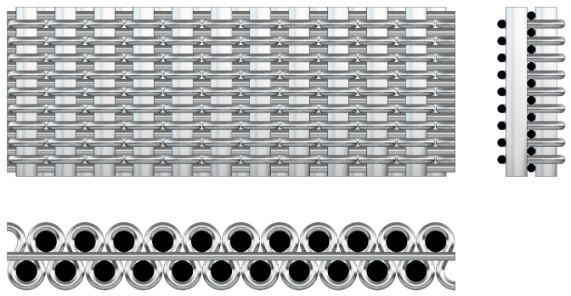
RPD HIFLO‑S is engineered to deliver high flow rates at fine filtration levels, offering up to twice the flow rate of traditional filter cloth at the same pore size, while still providing precise particle retention within the 5–40 micron range. Its three‑dimensional pore structure delivers high porosity (not open area), enabling efficient microplastic capture with remarkably low-pressure loss, even under demanding conditions.


Compared to filter cloth, RPD HIFLO‑S offers significantly greater mechanical stability, resisting deformation and even soft‑brush abrasion during cleaning. This robust structure translates into much easier cleanability and long‑term pore consistency, supporting both dirt‑holding performance and effective purging.


For OEMs aiming to balance fine‑particle retention, efficient throughput, and long‑service durability, RPD HIFLO‑S provides a high‑performance, future‑ready solution for microplastic‑focused filtration systems, all while acknowledging that plain weave remains the higher‑flow option at larger micron ratings.


Reinforce Your Microplastic Filter With Plastic Injected Components

What it is: Precision plastic injection‑molded housings and carriers that permanently integrate woven wire mesh (e.g., plain weave, RPD HIFLO‑S) to create rigid, dimensionally stable filtration elements for microplastic capture in appliances and water systems.

Understanding The Benefits

  • Capture at the source: Point‑of‑use filtration in appliances directly tackles the largest household contributor of microplastic fibers (laundry), reducing the load on downstream treatment and the environment

  • Regulatory alignment: Integrated filtration assemblies help manufacturers prepare for emerging requirements for washing‑machine microfiber filters and broader microplastics policies

  • Process‑ready reliability: Injection‑molded/mesh hybrids deliver repeatable dimensions and performance at scale, supporting design validation, lifecycle testing, and cost‑effective production
plastic injection molded parts


  • Wire mesh’s stable pore geometry provides precise, repeatable openings that efficiently capture microplastics and microfibers at high throughput, directly intercepting the leading household source of microplastic pollution at the appliance or system level
  • Injection molding delivers tight tolerances, consistent geometry, and high‑volume scalability, enabling OEMs to standardize integrated filtration assemblies as regulatory pressure, such as the U.S. push driven by the Fighting Fibers Act, continues to increase

  • Rigid molded frames protect the mesh and maximize dirt‑holding capacity, while design options like calendered surfaces and multi‑layer stacks help maintain efficiency and extend cleaning intervals, resulting in long service life with minimal maintenance

Two Weaves. One Innovative Future.

Plain weave delivers trusted flowrates with low pressure loss, while RPD HIFLO-S unlocks the perfect balance between precision and stability. The unique qualities of each weave variant provide engineers a clearer path to selecting the right mesh for evolving microplastic‑focused applications.

Learn More →
RPD-HILFLO-Woven-Wire-Filter-Cloth
stainless steel microplastic filtration

Woven Mesh vs. Synthetic Media

Woven wire mesh delivers a level of durability, cleanability, and recyclability that synthetic media often can’t match. This entry explores how each material performs under real‑world filtration demands, and helps you choose the right path for your next application.

Learn More →

Microplastic Filtration, Molded for Precision

Plastic injection‑molded wire mesh components create rigid, high‑accuracy filter structures that efficiently capture microplastics right at the source. And because molded parts are highly economical for large‑volume production, they offer OEMs a scalable path to integrating durable, mesh‑based filtration into next‑generation systems.

Learn More →
plastic injection molded parts

Cleaner, Safer Results With RPD HIFLO-S Mesh

Precision Filtration. Trusted Performance.

Discover how W.S.Tyler's RPD HIFLO-S can transform
your water filtration system with perfectly balanced
precision, durability, and efficiency.

Frequently Asked Questions

What problem am actually designing against, and does woven wire mesh address the primary source of microplastics?
The overwhelming majority of microplastics released from household appliances are fibrous microplastics shed during textile laundering, with a single wash releasing thousands to millions of fibers. 

Because these fibers are small, consistent in shape, and resistant to breakdown, woven wire mesh that is designed with stable, precisely controlled pore geometry, directly targets this specific contaminant class more reliably than media whose pore size shifts during use.
How does woven wire mesh compare to synthetic media in terms of dimensional stability under real‑world flow and pressure?

Synthetic filter media can deform, swell, or shed particles under temperature, mechanical abrasion, or chemical exposure conditions common in appliance and water‑treatment environments. Household appliances like washing machines generate turbulent flows and detergent‑rich water that accelerate microfiber release and degradation of certain polymers. 

Woven wire mesh maintains fixed, repeatable openings, ensuring consistent retention performance without structural drift over time.

Will woven wire mesh meet the throughput and pressure‑drop constraints of my system?

Yes. Woven wire mesh supports high flow rates while still capturing microplastics, especially compared to dense or compressible synthetic media that can quickly clog or compact. Research shows laundry effluent contains extremely high microfiber loads, and point‑of‑use interventions must balance capture efficiency with water movement to avoid operational bottlenecks.

Engineered weaves like plain weave and RPD structures allow designers to tune permeability while maintaining capture accuracy.

How does woven wire mesh integrate into scalable, manufacturable filtration components?
Woven wire mesh is easily incorporated into injection‑molded filtration housings, a growing design path as manufacturers prepare for rising regulatory pressure around microfiber release (e.g., U.S. initiatives tied to washing‑machine filtration requirements). Injection‑molded mesh hybrids enable high‑volume consistency and tight dimensional control.

This makes mesh a practical choice not only for performance, but for supply‑chain and manufacturing reliability.
Will woven wire mesh introduce additional microplastic contamination compared to synthetic media?

No. Woven wire mesh is fully metallic and does not generate plastic particles, and hybrid molded‑mesh components are engineered from temperature‑resistant, low‑moisture‑absorption polymers that resist wear and prevent micro‑debris formation. In contrast, standard synthetic filters or low‑grade plastics can degrade under heat, chemical exposure, or mechanical cycling, releasing particulates into water systems.

By combining durable metal mesh with high‑performance engineering plastics, hybrid systems avoid these failure modes entirely, delivering stable filtration performance without introducing microplastics, while capturing microfiber pollution at its source.

Explore Wire Mesh Solutions for Peak Water Filtration

Schedule your meeting with a W.S. Tyler advisor to get started.